
Most SAT study plans fail for one boring reason: they are not actually a system.
They are a vague intention. And vague intentions lose to homework, sports, phones, fatigue, and everything else that fills a real week.
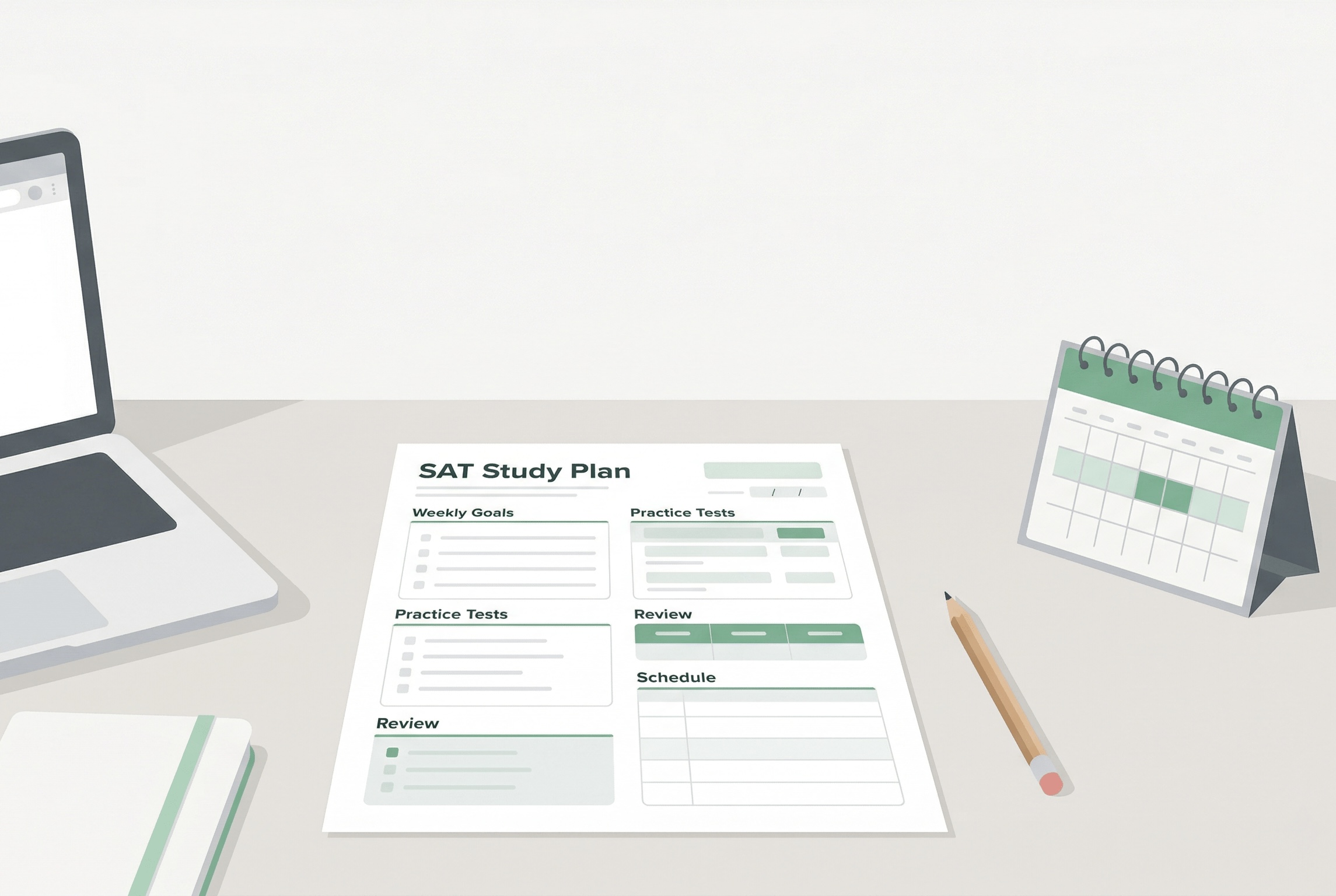
That is why I made a one-page SAT Plan Sheet. It turns “we should study more” into a weekly routine a student can actually follow and a parent can actually understand.
Download the free SAT Plan Sheet (PDF):
Get the SAT Plan Sheet here
If you want the version with coaching, accountability, and a weekly structure built around your student, you can also see our online SAT prep program.
What this SAT plan sheet is designed to fix
A lot of students are not struggling because they are lazy. They are struggling because the plan is fuzzy.
They kind of know they should:
- do more practice
- take a test soon
- review mistakes
- stay consistent
But “kind of” is not a study system.
This plan sheet helps students who:
- know they should study but do not know what to do each week
- take practice tests but do not improve because review is weak or missing
- start strong and then fall off when school gets busy
- need a plan that gives parents visibility without creating daily conflict
The goal is simple: make SAT prep feel clear enough to start and structured enough to keep going.
What is on the plan sheet
The sheet gives students a place to map out the few things that actually matter:
- weekly targets so each week has a job
- practice test timing so testing is not random
- mistake review so wrong answers turn into score gains
- accountability so the routine survives real life
That last one matters more than people think.
A plan is only useful if a student can follow it on a normal Tuesday, not just on the one magical day when they are motivated, well-rested, and suddenly interested in punctuation and quadratic functions.
How to set it up in 15 minutes
You do not need a huge prep overhaul to use this.
1. Pick the timeline
For most students, 6 to 8 weeks is a practical starting window.
- 6 weeks works if the student is already studying somewhat consistently
- 8 weeks works better if they are starting from scratch or balancing a heavy school schedule
The key is not choosing the perfect number. The key is choosing a real window and putting it on paper.
2. Set one weekly target
A weekly target should be specific enough to measure.
Good examples:
- “Improve Math timing by reducing careless mistakes”
- “Finish 4 Reading passages and review every missed question”
- “Complete 2 Bluebook modules and log all repeated errors”
Weak example:
- “Study more”
That is not a target. That is a guilt sentence.
3. Schedule practice tests intentionally
The rule is: fewer tests, better review.
For most students:
- 1 full practice test every 1 to 2 weeks is enough
- the real score growth comes from what happens after the test
If a student takes a full practice exam, glances at the score, and moves on, they are doing SAT-themed cardio.
4. Do a real mistake review
For every missed question, the student should write down:
- what kind of mistake it was
- what the correct approach was
- how they will avoid it next time
Most score stalls happen because students repeat the same error types without naming them clearly.
What real SAT progress usually looks like
Improvement is not usually dramatic from one day to the next.
It usually looks like:
- fewer repeated mistakes
- better pacing decisions
- more confidence on familiar question types
- less panic when a hard section appears
- more consistency from week to week
That is why this sheet is built around review and routine, not just volume.
If your family is also trying to understand college funding goals, you may want to read our Bright Futures SAT score guide for Florida families.
A simple weekly rhythm most students can follow
A realistic SAT plan often looks something like this:
Early in the week
- one focused practice block
- one short review block
- one skill target for Math, Reading, or Writing
Midweek
- another practice set
- error log update
- quick check on timing or stamina
Weekend
- full practice test or longer timed section
- deeper review
- update next week’s target
This works better than random cramming because each piece has a role.
The point is not to make the week feel intense. The point is to make it repeatable.
Who this is for and who it is not for
This plan sheet is a good fit for:
- students aiming for measurable improvement in 6 to 8 weeks
- families who want more structure without constant nagging
- students who do better with clear steps than vague pressure
- students preparing for the Digital SAT who need a cleaner weekly routine
It is probably not a good fit for:
- students looking for a magic trick with zero effort
- students who want to wing it the night before
- families who want a perfect plan but do not want to follow one
Want a version personalized to your student?
A free plan sheet is a great starting point. But some students need more than a blank structure.
They need:
- the right score target
- a smarter weekly workload
- accountability between sessions
- parent visibility without extra stress
- help deciding what to practice and what to ignore
That is exactly what we do inside LearnHaus.
Start here:
Use the sheet for one week and you will feel the difference quickly: less guessing, less friction, and a much clearer sense of what “good SAT prep” actually looks like.
Quick FAQ
How often should a student take a full practice test?
For most students, every 1 to 2 weeks is enough. More than that often steals time from review.
What matters more: time spent or consistency?
Consistency. A steady routine beats occasional four-hour panic sessions almost every time.
My student has ADHD. Will this still help?
Often, yes. A simple plan sheet reduces decisions and makes the week feel more concrete. For students with ADHD, shorter daily targets and tighter review loops usually work better than giant study blocks.
Should we use this alone or with tutoring?
Either can work. The sheet is useful on its own, but it works even better when someone is helping the student choose the right targets and review the right mistakes.